|
For the fruit, see kiwifruit. Quick facts for kids Kiwi
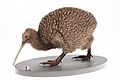
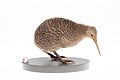
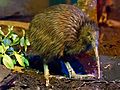
Scientific classification Kingdom: Animalia Phylum: Chordata Class: Aves Order: Struthioniformes Family: Apterygidae G.R. Gray, 1840 Genus: Apteryx Shaw, 1813 The kiwi is a special flightless bird that lives only in New Zealand. It's about the size of a domestic chicken. Kiwis are the smallest of a group of large flightless birds called ratites. This group also includes ostriches, emus, and cassowaries. Scientists have found that kiwis are related to the huge, extinct elephant birds from Madagascar. There are five types of kiwi, and most of them are in danger of disappearing. All kiwi species have been affected by forests being cut down in the past. But now, their forest homes are protected in special reserves and national parks. A kiwi's egg is one of the biggest eggs for its body size of any bird in the world. It can be up to 20% of the female's weight! Kiwis also have other unique features. They have feathers that look like hair, short strong legs, and long beaks. They use their nostrils at the end of their beak to sniff out food without even seeing it. These special features have made the kiwi famous around the world. The kiwi is a very important symbol of New Zealand. People often call New Zealanders "Kiwis" because of this strong connection. In 2019, it was estimated that only about 68,000 kiwis were left in the wild.
Contents Different Kinds of KiwiThere are five main types of kiwi, plus some smaller groups within those types. Image Scientific name Common Name Where They Live What They Look Like
Kiwi Life and Habits
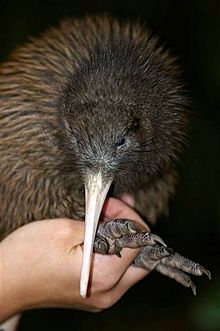
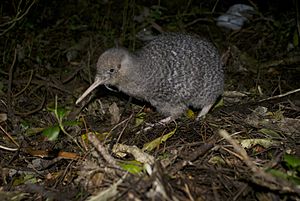
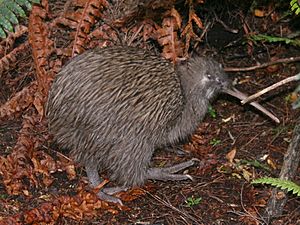
A young little-spotted kiwi at Zealandia Ecosanctuary Kiwis are night birds. This means they are active mostly after the sun goes down. They mainly eat small creatures like worms and insects. Kiwis usually live alone or with their partner in a special area called a territory. In their territory, they build several small burrows or caves where they sleep and lay their eggs. Kiwis are monogamous. This means a male and female kiwi stay together as a pair for their whole lives, until one of them dies. They live in the same territory and work together to raise their young. Female kiwis lay 1 to 3 eggs. Kiwis become adults when they are about 2 years old. They can live for more than 20 years. One kiwi in a zoo even lived to be 35 years old!
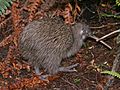
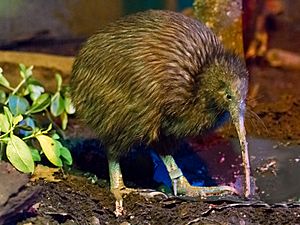
Kiwi in Tepuia, Rotorua, NZ A kiwi's eyes are very small compared to its body. They don't see very well, especially in the dark. Kiwis rely much more on their other senses. They have amazing hearing, a fantastic sense of smell, and can feel things around them. Their eyesight is so weak that blind kiwis have been found in nature. This shows how little they depend on their vision to survive and find food. All About Kiwi Eggs
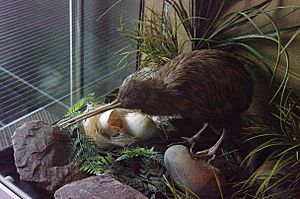
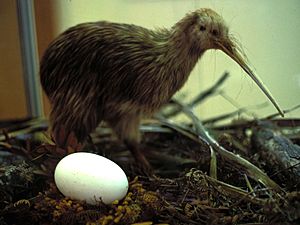
Kiwi with egg in the Kauri Museum, New Zealand The female brown kiwi lays huge eggs. These eggs can be almost one-sixth of her own body weight! It takes a very long time for kiwi eggs to hatch, about 11 weeks. This is the longest incubation time for any bird. For example, Yellow-breasted Chats' eggs hatch in only 11 days, and chickens' eggs take 21 days. Where Kiwis Live
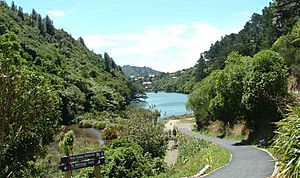
Stewart Island, New Zealand Kiwis like to live in burrows they dig in forests. They make their burrows in the ground, like rabbits do. They also find homes between tree roots or inside hollow logs. Kiwis make their burrows cozy and warm by lining them with leaves. Sometimes, they even hide the entrance to their burrows with piles of twigs. A kiwi might have more than ten different burrows in its territory and will switch between them sometimes. Sadly, kiwis are in danger from many mammals that were brought to New Zealand. Stoats are the biggest threat to young kiwi chicks. Ferrets and dogs can kill adult kiwis. Protecting Kiwis: Sanctuaries
North Island Brown Kiwi at Rainbow Springs Kiwi Wildlife Park in New Zealand In 2000, the New Zealand Department of Conservation created five special kiwi sanctuaries. These places focus on finding ways to protect kiwis and help their numbers grow. There are three kiwi sanctuaries in the North Island and two in the South Island: Many other protected areas and fenced sanctuaries also have many kiwis, including:
Area of Zealandia (wildlife sanctuary)
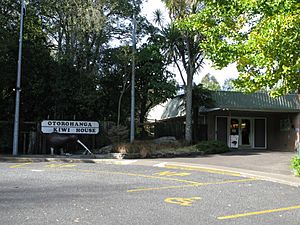
Otorohanga Kiwi House North Island brown kiwis were also moved to the Cape Sanctuary in Hawke's Bay between 2008 and 2011. Chicks raised there were then released into the Maungataniwha Native Forest. Kiwis in ZoosIn 1851, the London Zoo was the first zoo to have a kiwi. The first time kiwis were successfully bred in a zoo was in 1945. As of 2007, only 13 zoos outside New Zealand have kiwis. Some of these include the Frankfurt Zoo, Berlin Zoo, San Diego Zoo, and the National Zoo in Washington, DC. Kiwi: A National Symbol
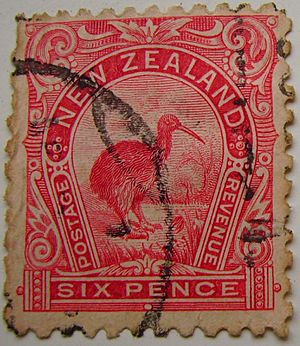
The kiwi on an 1898 New Zealand stamp The kiwi first became a symbol in the late 1800s. It appeared on military badges in New Zealand. In 1906, when Kiwi Shoe Polish became popular in the UK and US, the kiwi symbol became even more widely known. During the First World War, New Zealand soldiers were often called "kiwis." A huge kiwi was even carved into a chalk hill in England, which is now known as the Bulford kiwi. Today, the name "Kiwis" is used for all New Zealanders, both at home and abroad.
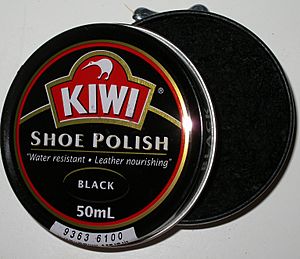
Kiwi shoe polish The kiwi is now the most famous national symbol for New Zealand. You can see the bird on the country's coat of arms, and on the badges of many New Zealand cities, clubs, and groups. A red kiwi shape is also in the middle of the roundel (a circular emblem) of the Royal New Zealand Air Force. The kiwi is part of the logo for the New Zealand Rugby League. The New Zealand national rugby league team is even nicknamed the Kiwis. An image of a kiwi is on the back of the New Zealand dollar coin. In money trading, the New Zealand dollar is often simply called "the kiwi." Māori and the KiwiThe Māori people traditionally believed that kiwis were protected by Tane Mahuta, the god of the forest. They used kiwis for food, and their feathers were used to make special ceremonial cloaks called kahu kiwi. Today, kiwi feathers are still used for these cloaks. However, the feathers are now collected from birds that have died naturally, from accidents, or from kiwis in captivity. Kiwis are no longer hunted, and some Māori people see themselves as the birds' guardians. Images for kids See also
|