|
1960sCheap fuel. Big cars. Big changes.
Sixties design reflected pop art, optical art, and psychedelic influences. Road Atlas covers took cues from advertising and movie posters, favoring clear graphic communication in flat colors and iconic shapes. Graphics, and even type fonts, were image-filled to communicate more with less.
Sixties design reflected pop art, optical art, and psychedelic influences. Road Atlas covers took cues from advertising and movie posters, favoring clear graphic communication in flat colors and iconic shapes. Graphics, and even type fonts, were image-filled to communicate more with less. 1970sGas shortage. Speed limit. Economy cars.
Photography drove Road Atlas design in the 1970s. Type and illustrations were mixed with photos and collages of color-enhanced images. Straightforward and efficient was the design, just like the cars travelers drove.
Photography drove RRoad Atlas design in the 1970s. Type and illustrations were mixed with photos and collages of color-enhanced images. Straightforward and efficient was the design, just like the cars travelers drove. 1980sCommuters. American optimism. Family road trips.
Crisp photos dominated Rand McNally Road Atlas covers, showcasing America’s beauty in big, bold hues and letting the image sell the adventure. American imagery dominated the covers, reflecting renewed national pride that made exploring the United States popular.
Crisp photos dominated Rand McNally Road Atlas covers, showcasing America’s beauty in big, bold hues and letting the image sell the adventure. American imagery dominated the covers, reflecting renewed national pride that made exploring the United States popular. 1990sSUVs zoom. Technology booms.
It was a digital design decade – computers were used for design and typesetting. Professional digital cameras captured and stored photos. Printing from film was replaced with digital processes. Covers at the time reflected a more magazine-like feel with bits of copy and beautiful landscape photos.
It was a digital design decade – computers were used for design and typesetting. Professional digital cameras captured and stored photos. Printing from film was replaced with digital processes. Covers at the time reflected a more magazine-like feel with bits of copy and beautiful landscape photos. 2000sMore time on the road. Keeping up with drivers. Advanced software allowed designers to create more expressive and communicative covers. Rand McNally focused imagery on the “destination” for vacationers and introduced the distinctive yellow that identifies the atlas to this day.
Advanced software allowed designers to create more expressive and communicative covers. Rand McNally focused imagery on the “destination” for vacationers and introduced the distinctive yellow that identifies the atlas to this day. 2010sThe journey continues.
Road Atlas covers during this decade showcased beautiful landscapes and national parks in high-resolution, full-bleed photos – providing visual inspiration for hopping in the car and hitting the road.
Road Atlas covers during this decade showcased beautiful landscapes and national parks in high-resolution, full-bleed photos – providing visual inspiration for hopping in the car and hitting the road. 2020sRoad Travel Renaissance.
The pandemic brought a resurgence of the Great American Road Trip – families now had the time to explore from coast to coast. Captivating scenic images on the covers reminded folks of the beauty in the various landscapes.
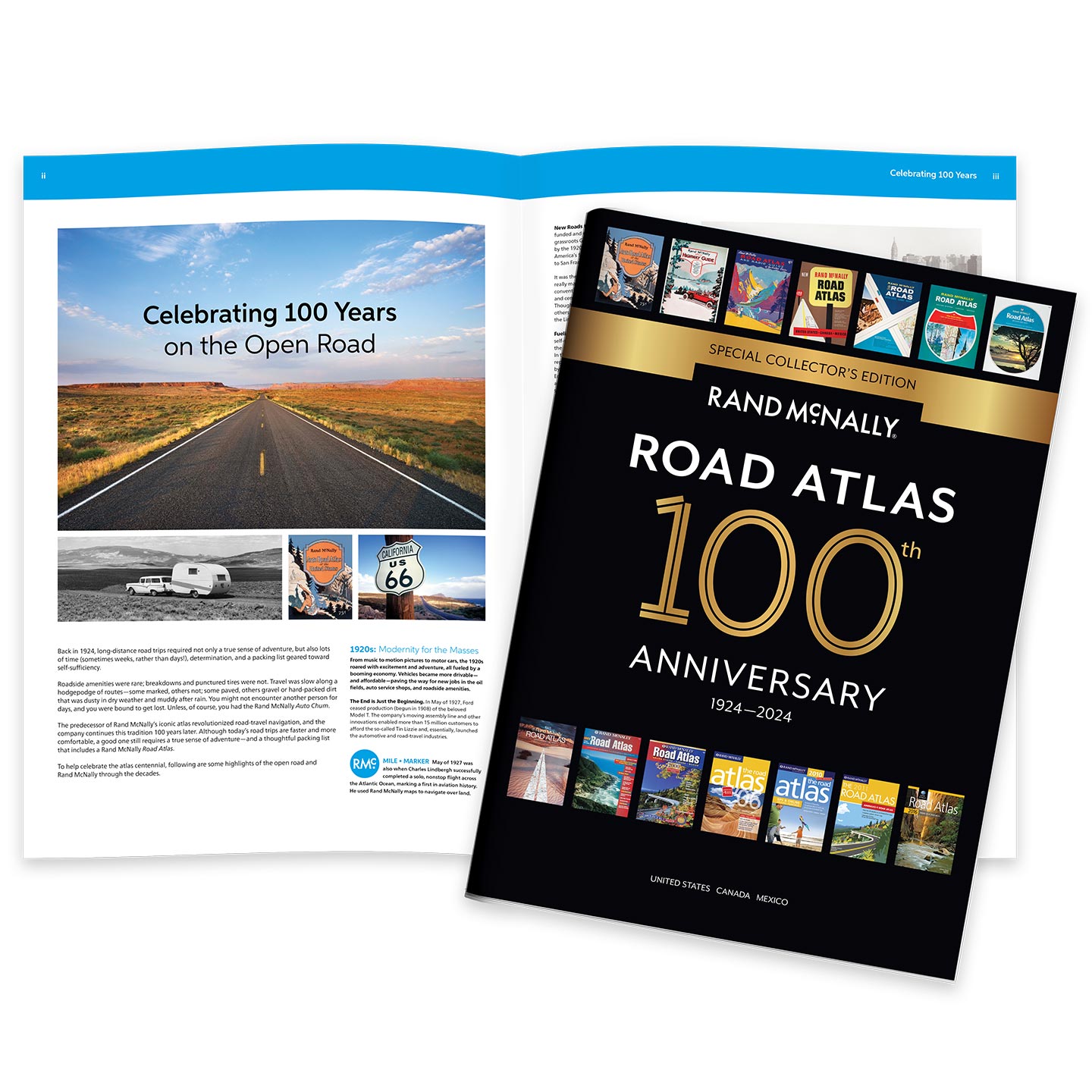
The pandemic brought a resurgence of the Great American Road Trip – families now had the time to explore from coast to coast. Captivating scenic images on the covers reminded folks of the beauty in the various landscapes. The Road Atlas 100th Anniversary Special Collector’s Edition Buy Now
|